
Data is scattered across systems
Shipment and warehouse data is often split across TMS, WMS, ERP, spreadsheets, and external portals. Teams have to check multiple sources for the latest information.
We help logistics teams improve shipment visibility, connect data across systems, and gain greater control over day-to-day operations.
Disconnected operations
Shipment and warehouse data is often split across TMS, WMS, ERP, spreadsheets, and external portals. Teams have to check multiple sources for the latest information.
We connect existing systems, centralize key information, or build custom tools to reduce manual updates and switching between systems.
Connect shipment, warehouse, customer, and billing data so teams can work with up-to-date information without checking several systems.
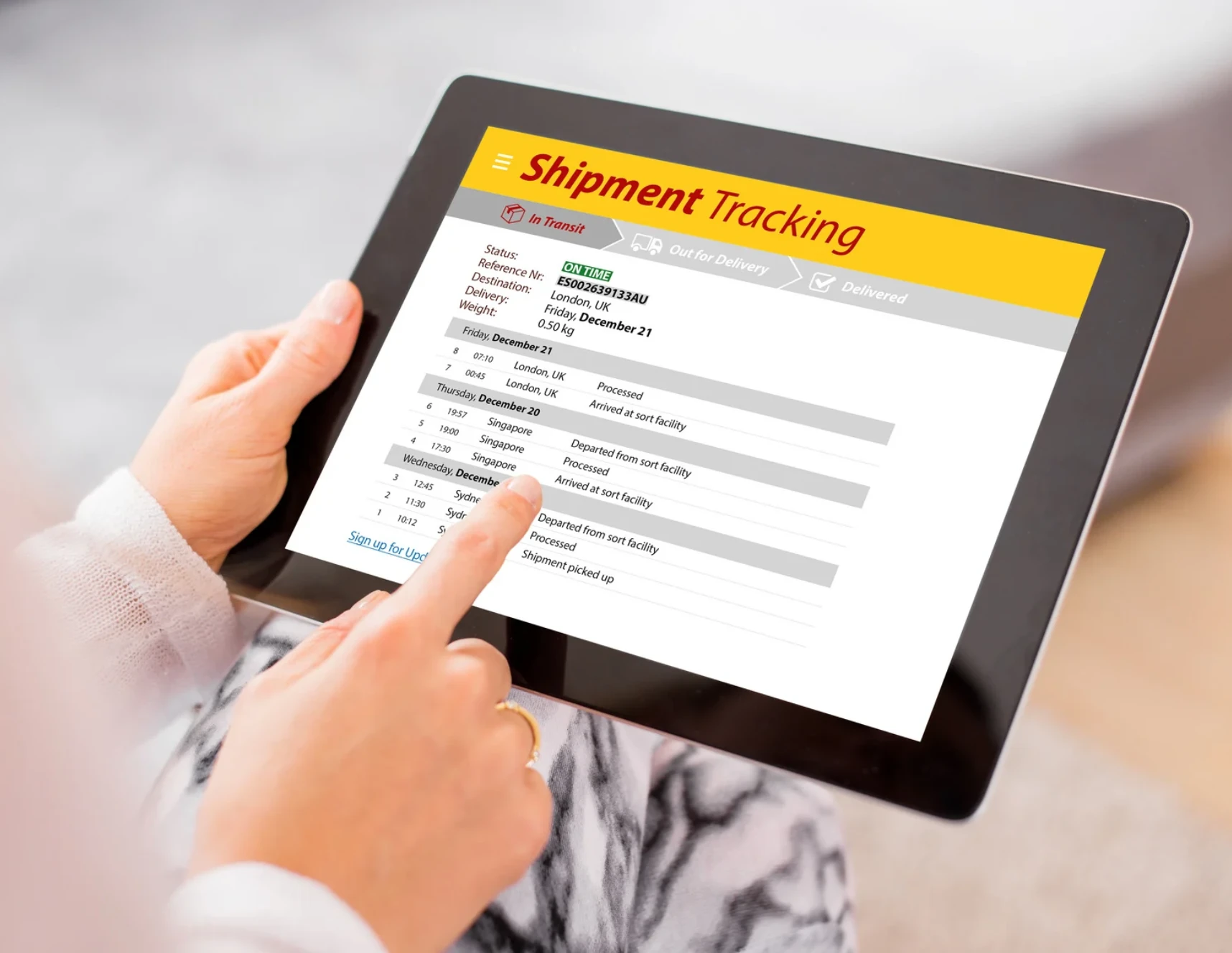
Bring carrier updates, delivery changes, and shipment statuses together so customer service and operations teams have consistent information to work from.
Link inventory, picking, fulfillment, dispatch, and delivery updates so handoffs require fewer repeated checks.

Use alerts to highlight delays, missing documents, failed updates, and fulfillment issues that require action.
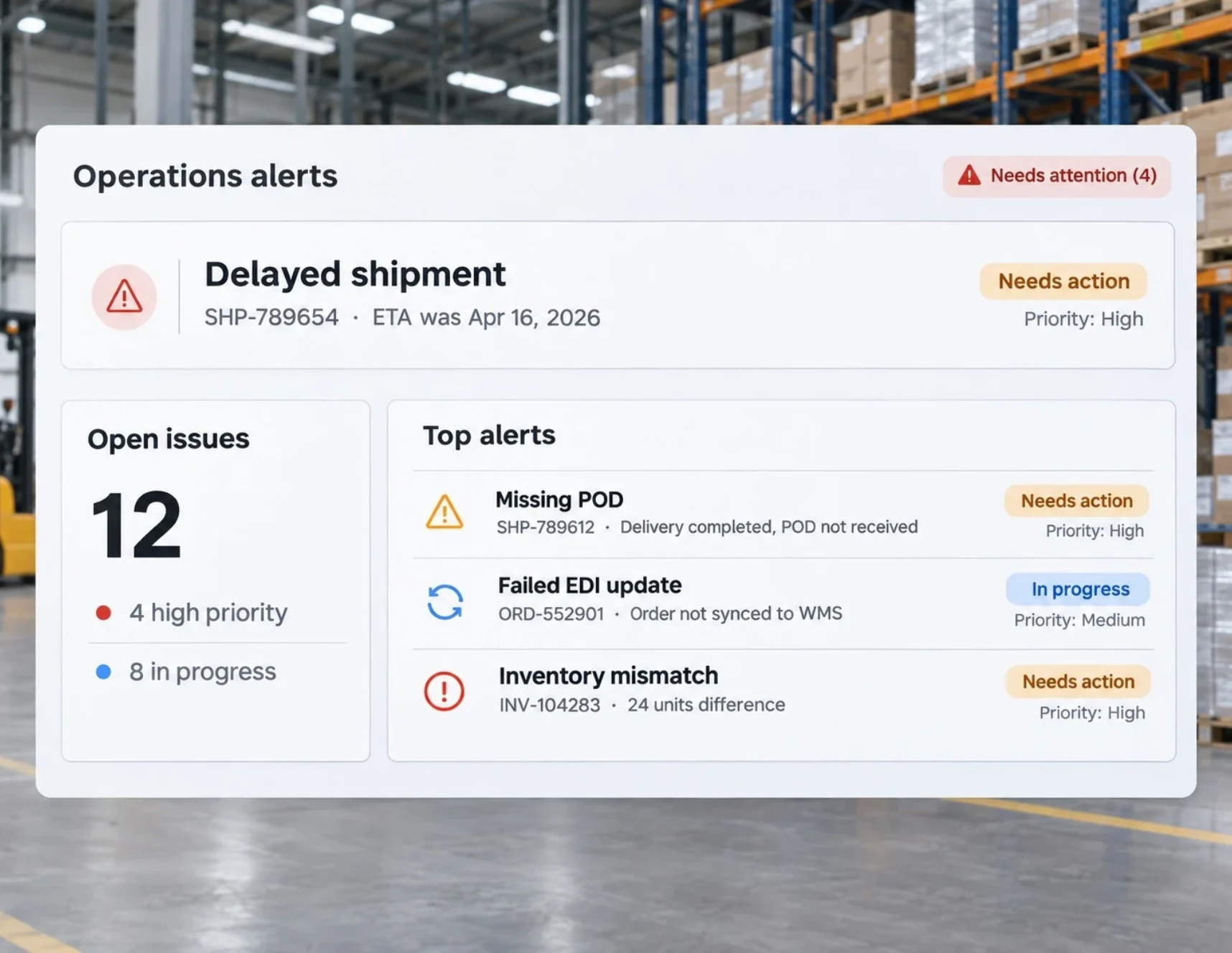
Bring delivery, warehouse, carrier, and service data into reporting views with fewer manual exports and less reconciliation.

Link recorded storage, handling, accessorial, and other activity to client-specific billing rules so charges are easier to capture and verify.
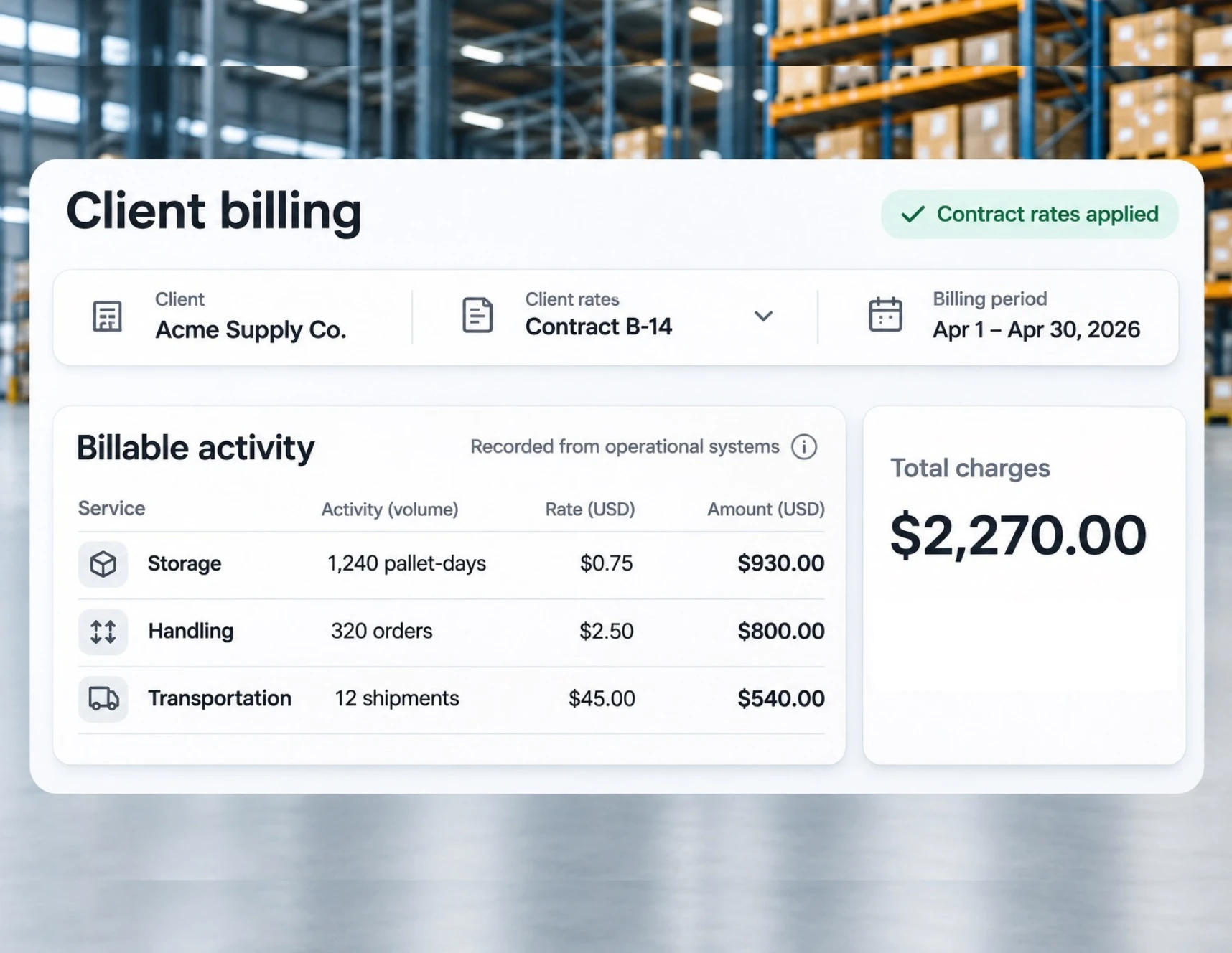
See examples of software built for transportation, warehouse, delivery, and other logistics operations.
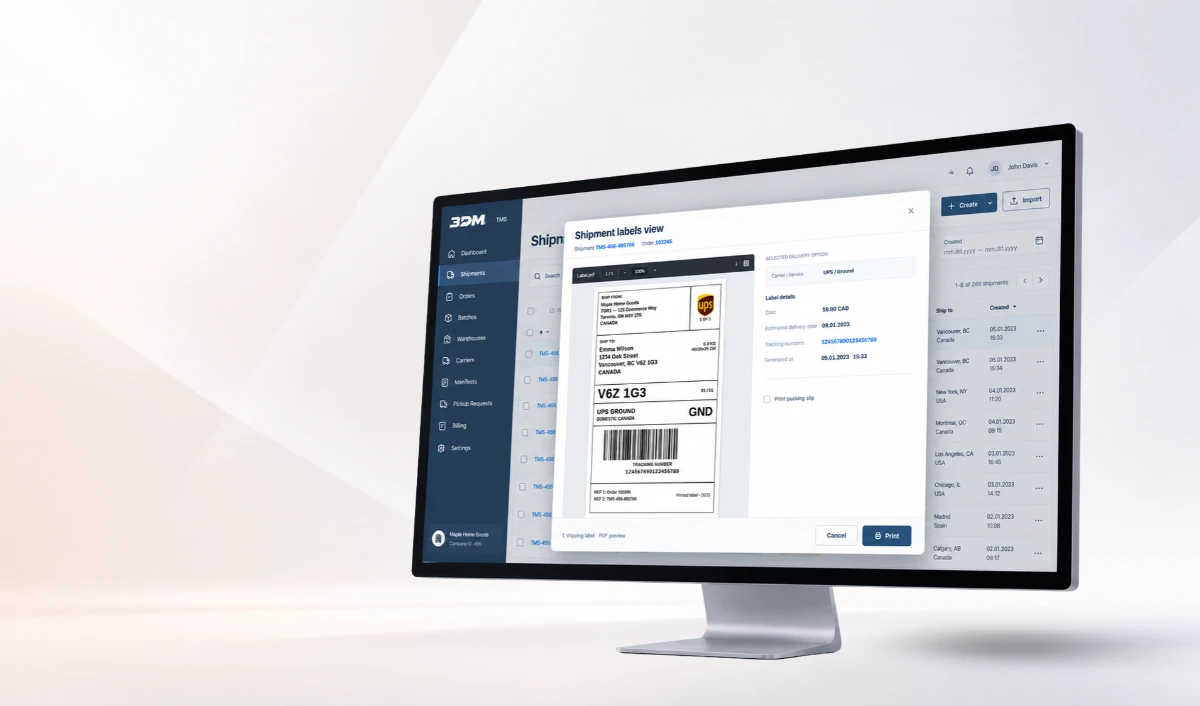
A web-based TMS that combined multi-carrier workflows and eCommerce order data so teams could manage dispatch and shipment tracking in one place.
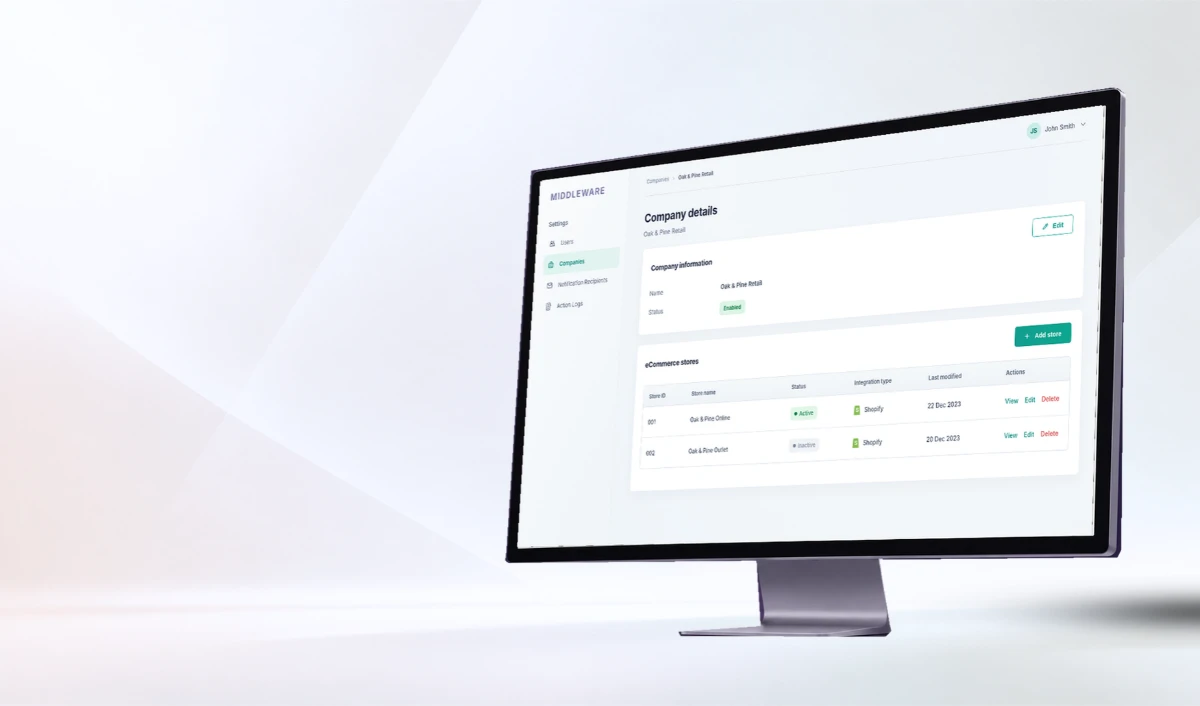
The middleware synchronized warehouse and eCommerce data, helping teams reduce stock and order mismatches across connected systems.




Common rules can apply across the business while service requirements vary by client.
Billing can reflect different client agreements, services, and charge types, including storage, handling, accessorial, and other client-specific charges.
Client access can be limited to their own information, while internal teams can work across the clients they manage.
What already works for similar clients can be reused, while only the rules and information that differ need to be added.
Multiple locations can share one system while keeping inventory, users, rules, and reporting separate where needed.