


Understand the systems and data first
We first look at where information comes from, where it needs to go, and how each system supports day-to-day work.
We help keep information consistent across the systems your business uses, so your team spends less time entering the same data in multiple places.
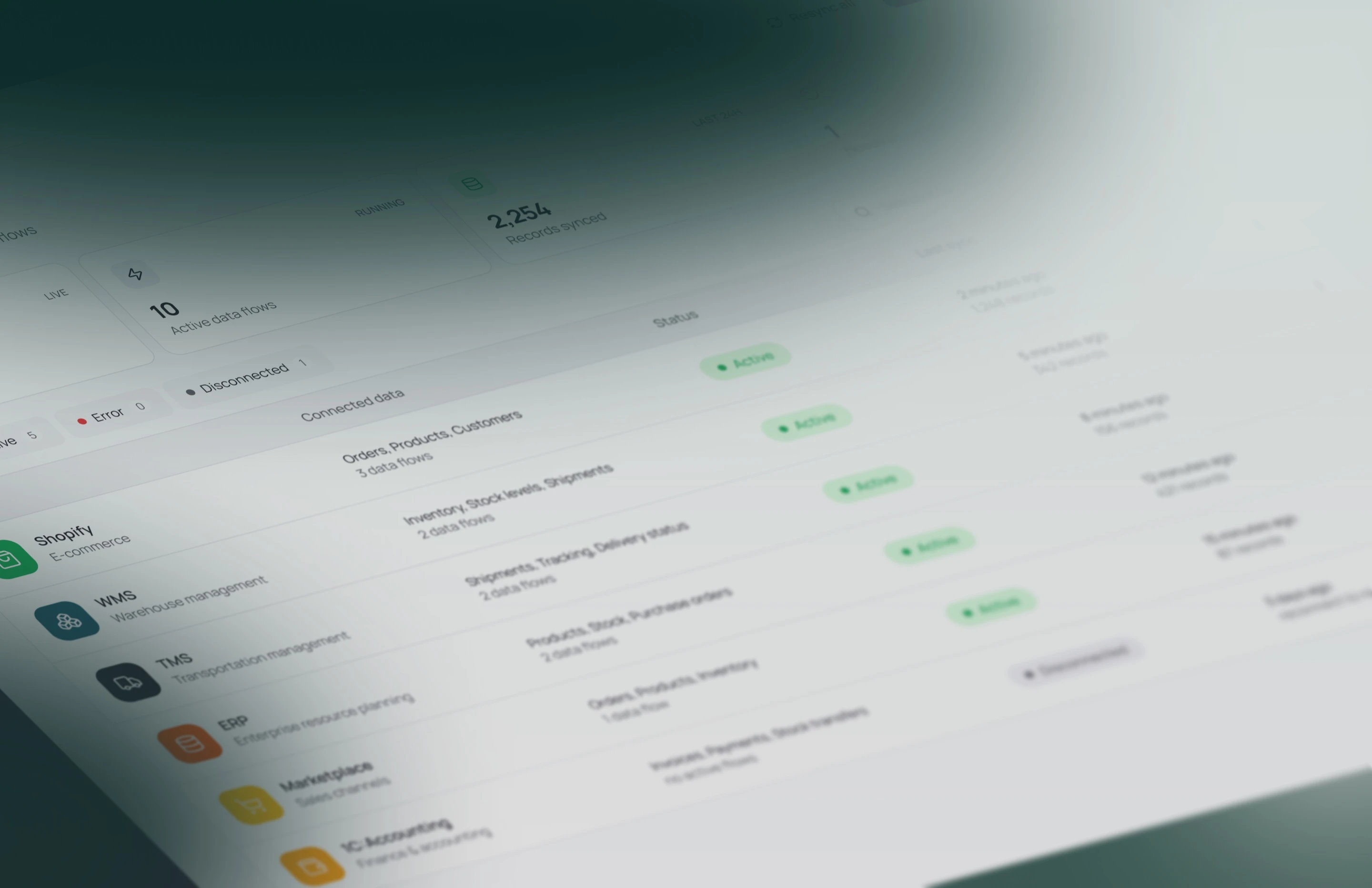
ERP, CRM, WMS, TMS, and other core systems stay in sync, reducing data gaps and manual fixes in day-to-day work.
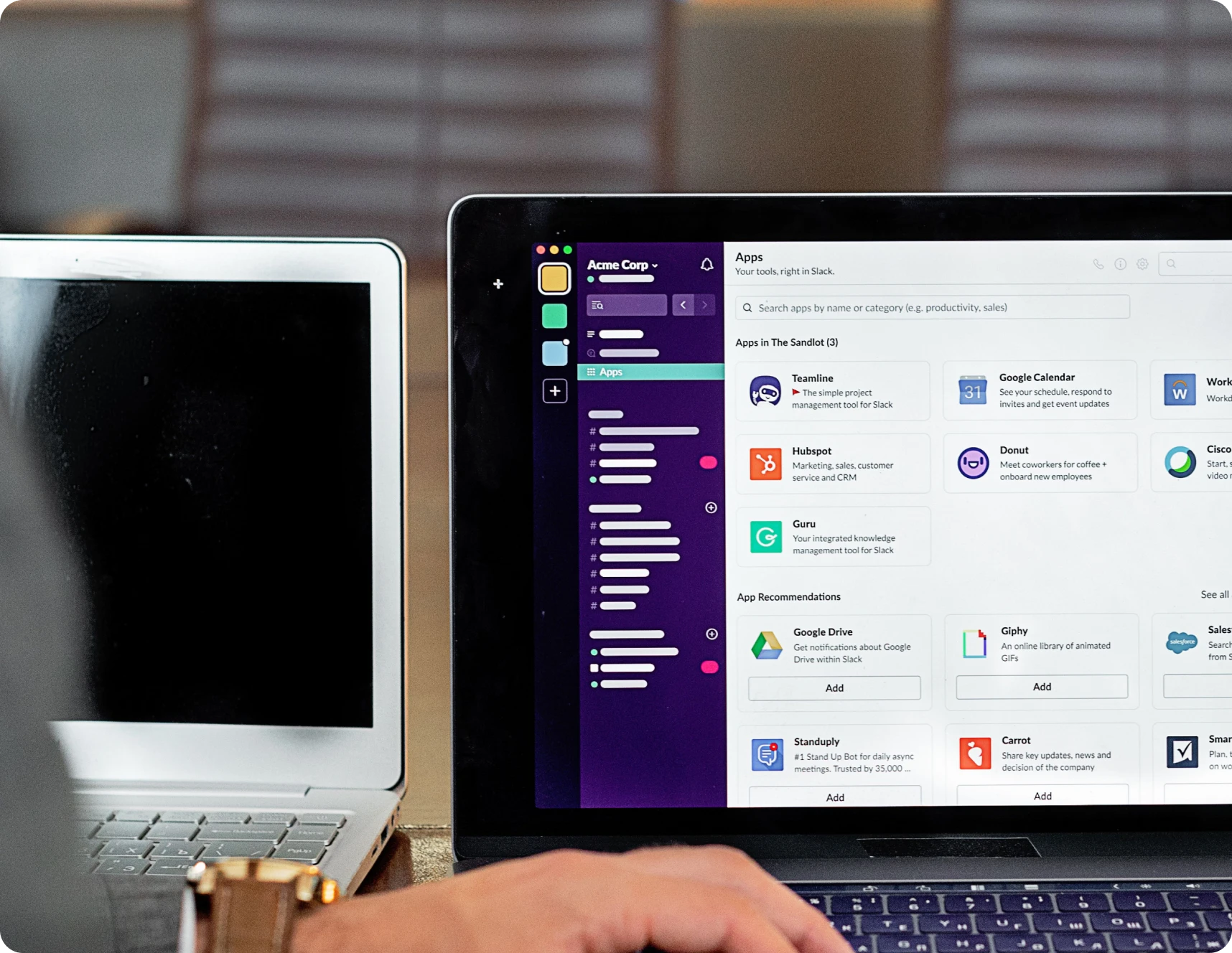
Custom API connections support data exchange and business rules that standard connectors cannot handle on their own.
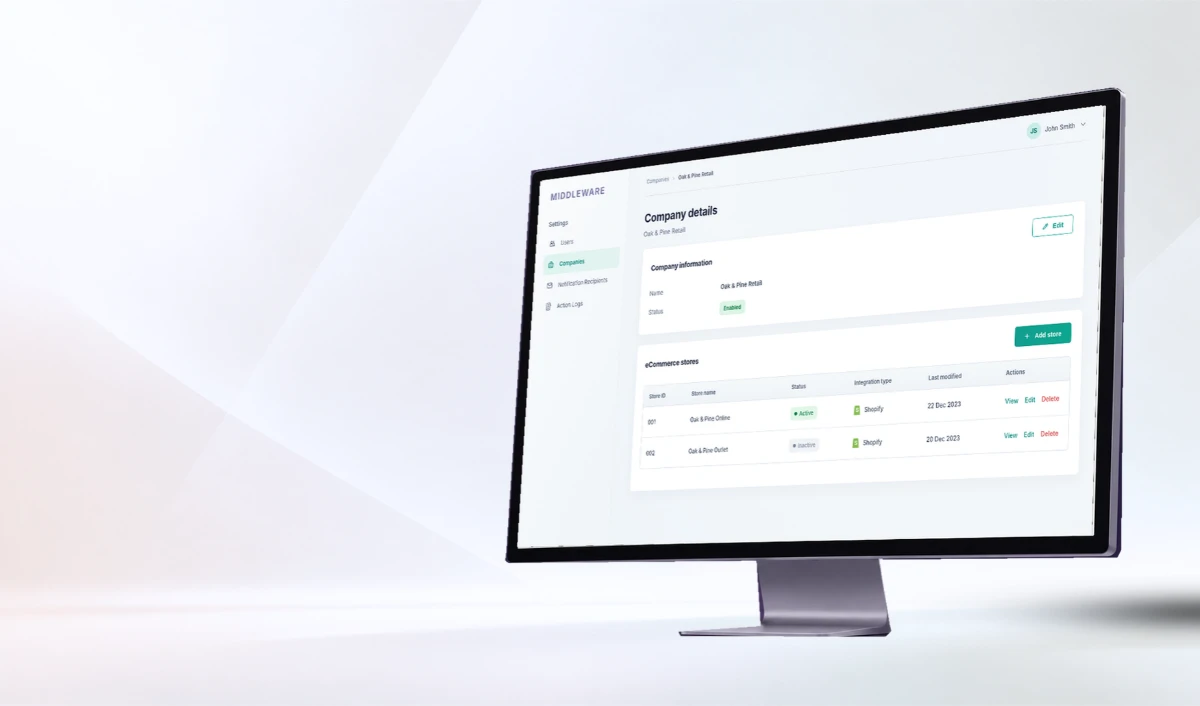
Middleware controls how information moves between multiple systems, making complex connections easier to manage and maintain.

Older internal systems can exchange information with modern applications when standard connectors are not enough and a full replacement is unnecessary.
Your systems exchange information with partner platforms, vendor tools, marketplaces, and external services, so the right teams receive the data they need.

Data from connected systems feeds dashboards and reports, reducing manual exports and helping teams work with consistent information.

We first look at where information comes from, where it needs to go, and how each system supports day-to-day work.

We consider your business rules, exceptions, and system limits instead of assuming the same setup will work for every connection.

We define what should happen when data is missing, an update fails, or one system is unavailable, so issues are easier to detect and resolve.

We plan for future changes and maintenance from the start so integrations can adapt as your systems and requirements evolve.
See how custom integrations connect core business systems, reduce manual updates, and improve access to operational information.
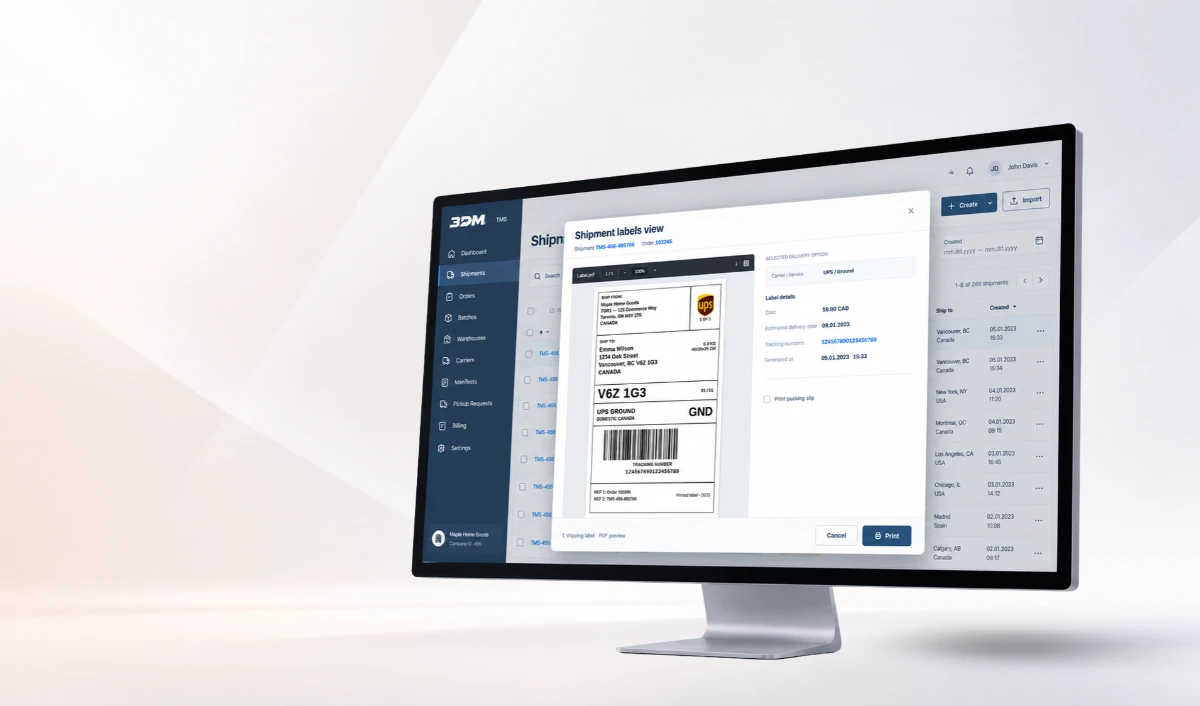
A web-based TMS that combined multi-carrier workflows and eCommerce order data so teams could manage dispatch and shipment tracking in one place.
The middleware synchronized warehouse and eCommerce data, helping teams reduce stock and order mismatches across connected systems.
We look at the systems involved, what information needs to move, and the ways each system can connect. If an API is limited or unavailable, we check whether data can be exchanged another way and explain any constraints before recommending a solution.
We use each system’s security controls and give the integration only the access it needs. We also agree which data can move between systems and who can see or manage it.
The integration can record failed or incomplete updates and alert the person or team responsible. Depending on the systems involved and the impact of a missed update, it may retry the update automatically or flag it for manual review.
Before launch, we test how information moves between systems using scenarios based on your day-to-day work. If switching everything at once could disrupt operations, we can roll out the integration in stages.
Cost and timeline depend on the systems involved, available access, data structure, business rules, and testing and rollout requirements. Dependencies on external vendors can also affect the estimate.
After final delivery, a 30-day warranty covers defects within the agreed scope. Separate support plans are available for monitoring, maintenance, fixes, and updates when a connected system or API changes.