
Difficulty completing services
Long forms, unclear instructions, and barriers for people with different access needs can lead to mistakes and more requests for help.
We help government and public service organizations manage requests, records, staff workflows, and public- facing services across connected systems.
Service process gaps
Long forms, unclear instructions, and barriers for people with different access needs can lead to mistakes and more requests for help.
We help bring public-facing services, staff work, records, and data together so requests are easier to complete, manage, and follow.
Forms, instructions, required information, and next steps can be simplified so people can submit what is needed with fewer avoidable errors.

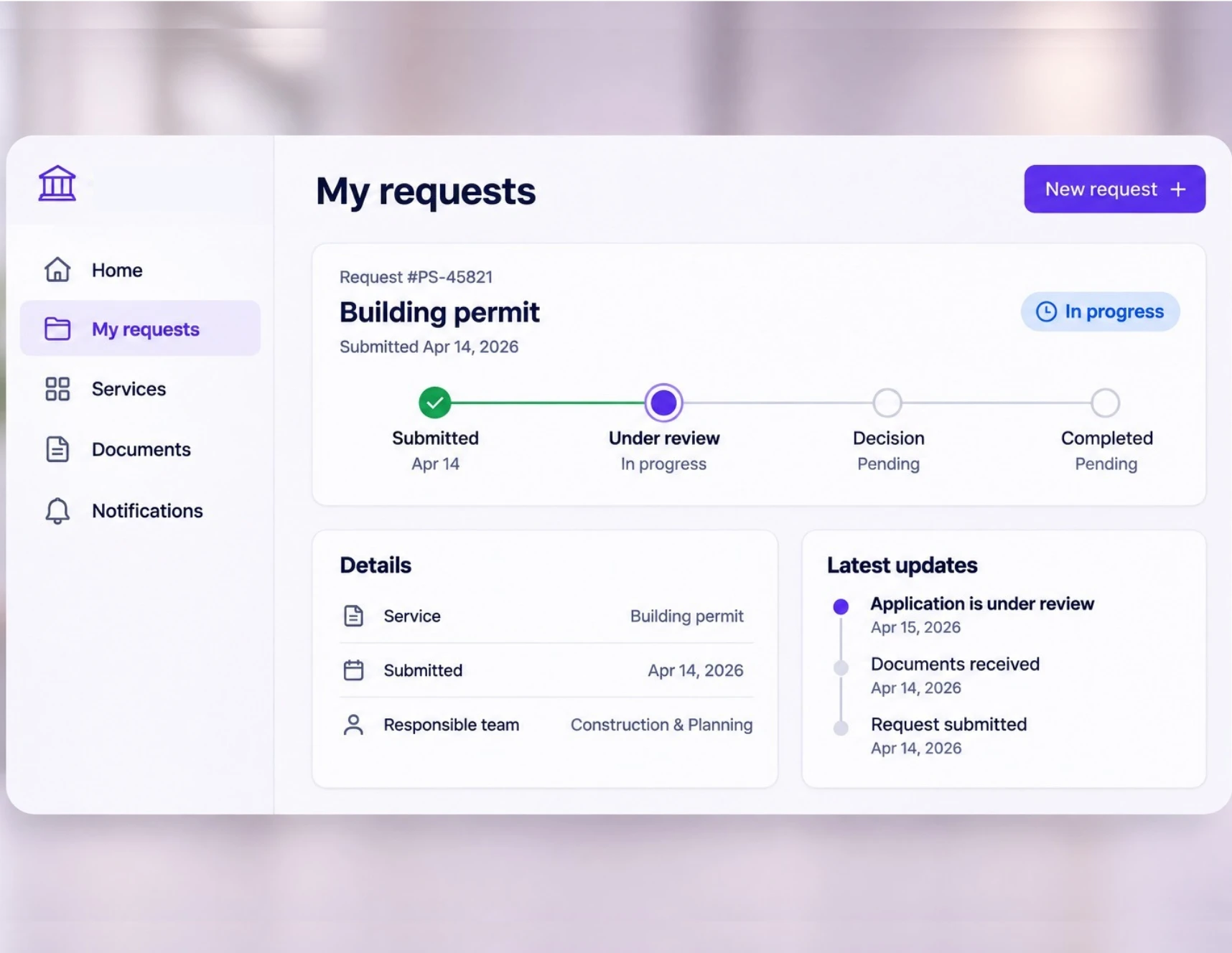
Request status, required actions, and updates stay connected, giving people a clearer view of what is happening and reducing status questions for staff.
Available information can be reused where appropriate, while routine checks, reminders, or updates can be automated and cases that need judgement stay with staff.

The same service data can feed forms, admin tools, reporting, and existing systems so teams do not have to maintain it in several places.

Clear ownership shows who is responsible for a request, what action is needed, and what has already happened when several teams or organizations are involved.

Reports or dashboards bring key service information together so teams can see where requests wait, support demand grows, or workloads begin to build up.

service data.
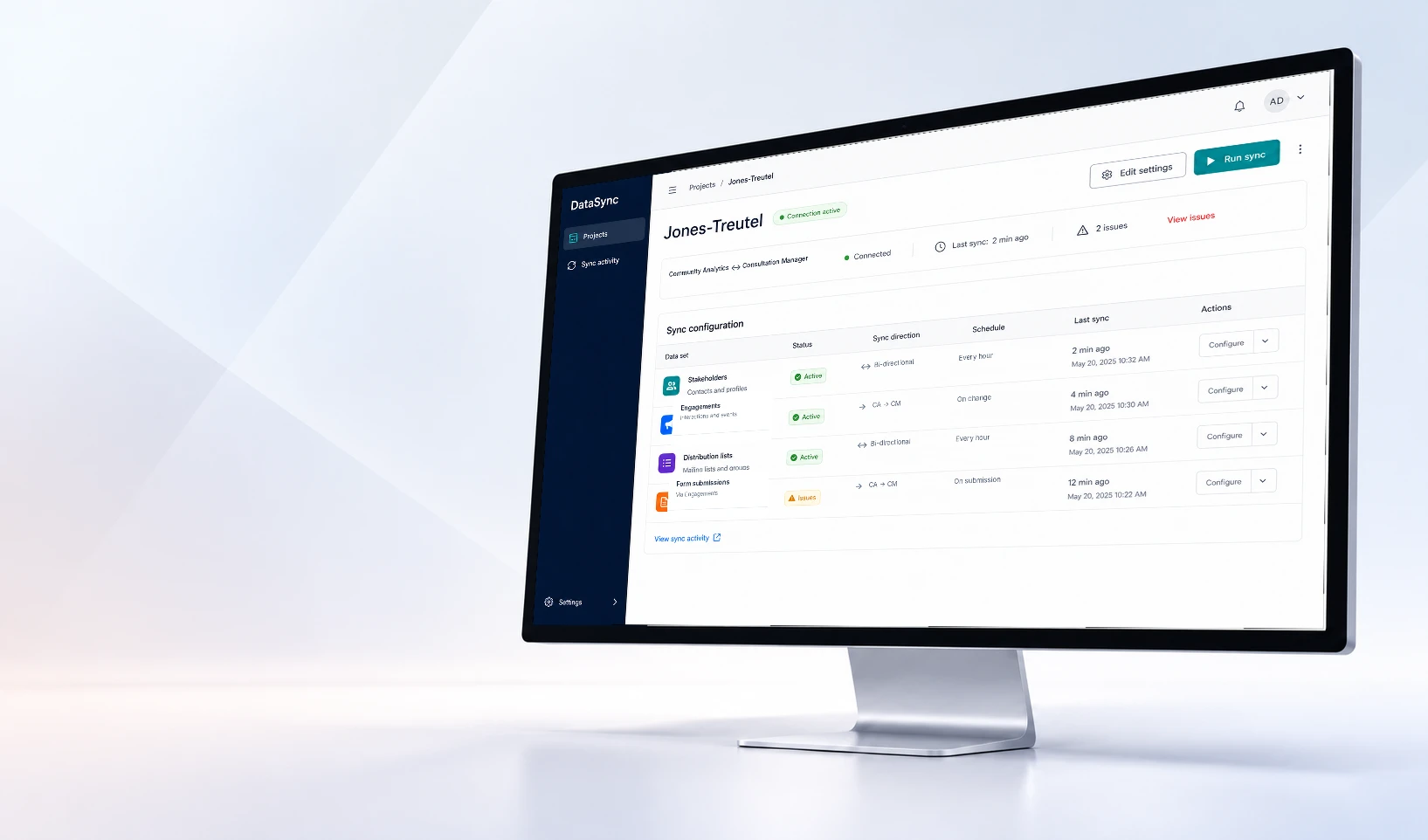
The system synchronized records between platforms, using logging and conflict handling to flag mismatches and reduce manual review.


Not always. We first look at what the current system can support and where the main limitations are. The solution may be an integration, a new admin tool, or a focused improvement rather than a full replacement.
It depends on the available access and how the existing systems manage information. We use this to determine what can be connected or reused and where changes may be needed.
We include the accessibility requirements defined for the service in design, development, and testing. Your team confirms which legal or organizational standards apply.
Your team defines the policies, security requirements, and data-handling rules that apply. We implement the agreed requirements for areas such as user access, authentication, logging, data handling, and integrations. We do not provide legal or regulatory certification.
We assess what needs to be kept and the quality, format, and volume of the existing information. Then we agree what should be moved and how your team will check the result.
Where the existing service needs to remain available, changes can be introduced in stages and checked before more users or teams move to the updated version.