


Scattered multilingual content
Text, documents, audio, video, terminology, and translations can accumulate across languages and projects, making current materials harder to find and reuse.
We help language technology teams manage multilingual content, translation, transcription, terminology, files, and automated processing across the tools they use.
Complex language workflows
Text, documents, audio, video, terminology, and translations can accumulate across languages and projects, making current materials harder to find and reuse.
We help teams keep multilingual content, reusable references, reviews, automated work, and existing tools connected without rebuilding the same context for every project.
Glossaries, approved terminology, style guidance, previous results, and project context can be reused where relevant, reducing repeated setup and helping language output stay consistent.
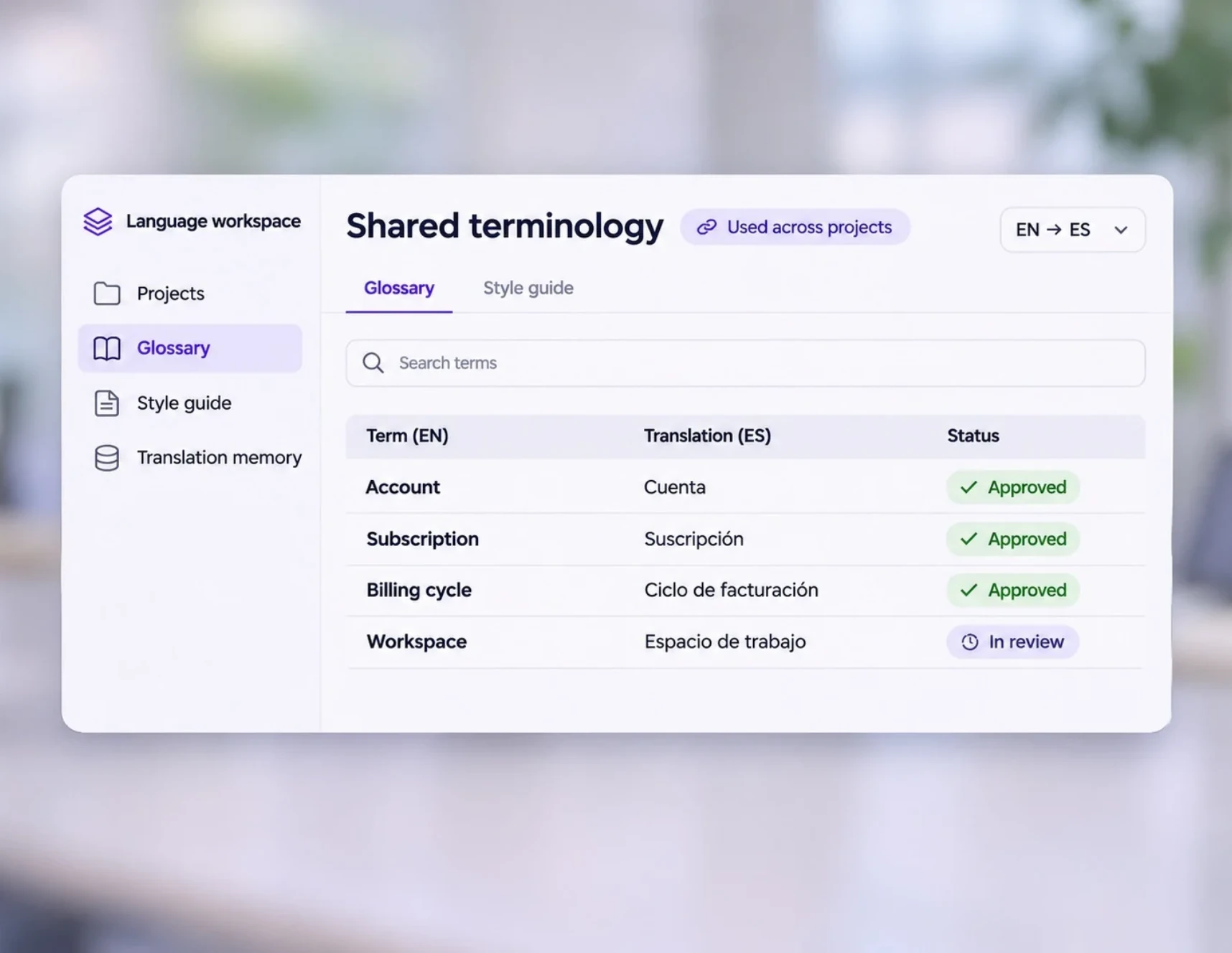
Different content can follow different checks based on quality, context, or business risk, while approved decisions remain available for later work.

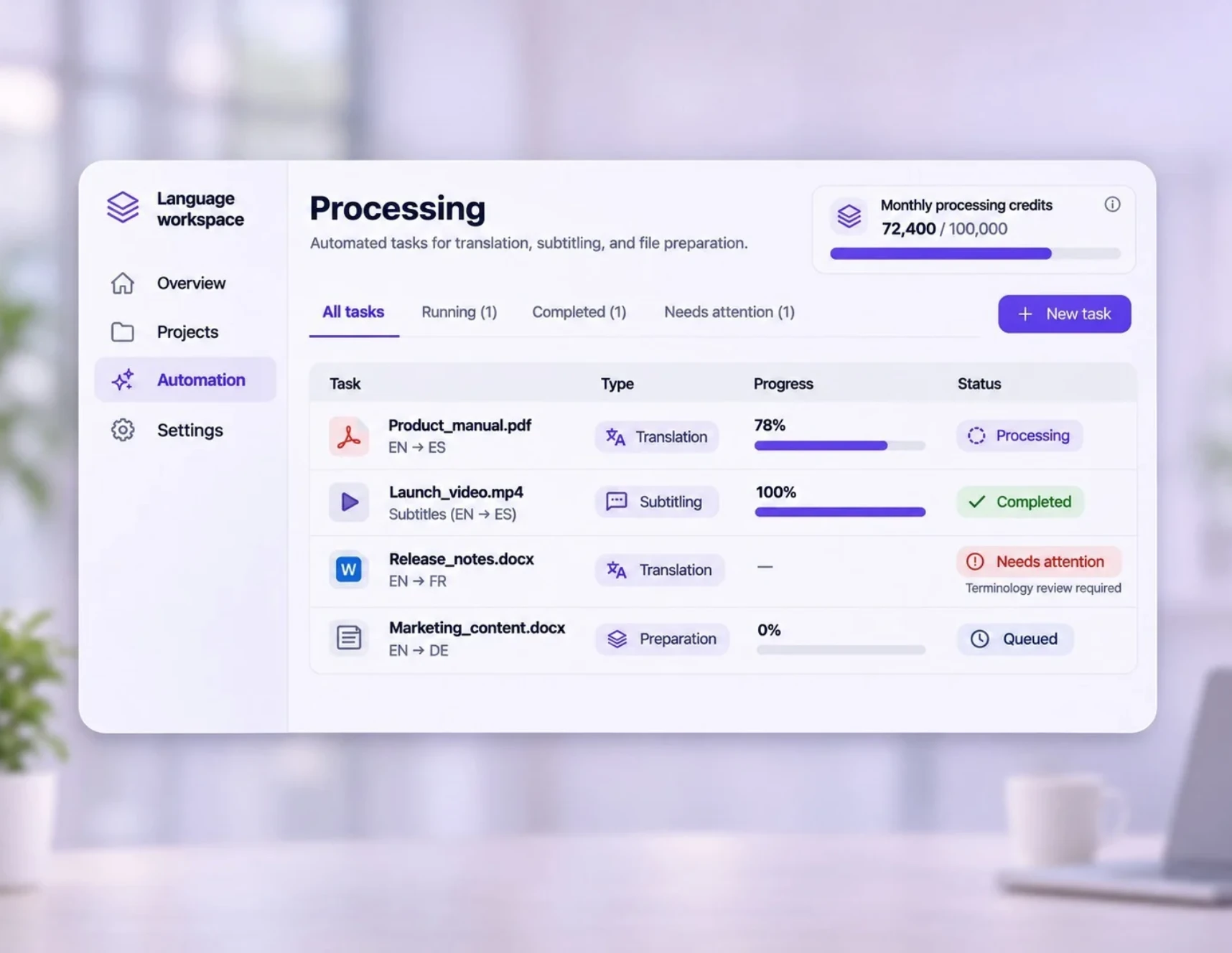
Documents, subtitles, audio, video, and their results stay linked to the relevant work, making current inputs and outputs easier to find.

Teams can see what is running, completed, delayed, or needs attention. Usage limits or alerts can also be applied where needed.
Roles, workspaces, saved history, and usage rules can reflect what different users need to see, manage, or reuse.

Content, terminology, approved changes, and results can move between language, content, and AI tools without repeated imports, exports, or manual updates.



We review the existing translation memory, terminology, and other reusable language resources to determine what can be kept or moved without losing previous work.
Your team defines what data can be processed and which privacy or security requirements apply. We implement the agreed rules for providers, access, retention, and how data is handled. We do not provide legal or regulatory certification.
Not necessarily. If provider flexibility matters, the product can be structured so language or AI services can be changed or added as requirements evolve.
Usage can be tracked by user, project, content volume, or external service. Limits or alerts can help prevent unexpected costs.
Teams can keep a record of changes, reviews, and approvals, including who made an update and when it was approved.
